
 Additives
 Aquarium
 Automation


 Heating/cooling
 Lighting
 Skimmer
 Filtration
 Osmolator/RO

 Spare parts
 Pump
Pump


 Reactor
 Subsrtats
 Others


 Aeration
 Aquascaping
 CO2
CO2
 Scenery
 Fertilizer
 Cleaning
 Food
Food


 Construction
 Care
Care
 Pump
Pump
 Food
Food


Offer your aquarium a touch of elegance with the Chrysaora hysoscella, a fascinating jellyfish from reproduction. Before welcoming it, make sure your aquarium is ready to maintain its well-being.
 Secure paymentCB or bank transfert
 We send worldwide! Register to see costs
 Question? Contact us, we answer quickly!
Let yourself be seduced by the hypnotic beauty of the Chrysaora hysoscella Jellyfish. With its graceful movements and captivating translucency, it will bring a unique dimension to your aquarium. ✨
Important: Introducing jellyfish into your aquarium requires careful preparation. The nitrogen cycle must be perfectly established to ensure water quality and the well-being of these delicate creatures. Do not hesitate to contact us for personalized advice on setting up and monitoring your jellyfish aquarium. 🐠
Our Chrysaora hysoscella are from reproduction, thus contributing to the preservation of wild populations. By choosing Recif'Art, you are opting for a responsible and sustainable approach to aquarism. 🌊
Warning: This species is stinging. Handle it with care and avoid direct contact with the skin.
Shipping costs: 42 euros including VAT up to 10 jellyfish.
Maintaining Chrysaora hysoscella requires a specific aquarium with a circular and gentle water flow to avoid damaging them. The salinity and temperature of the water must be stable and adapted to their species. It is crucial that the nitrogen cycle is perfectly established before their introduction, in order to guarantee water quality and avoid peaks of nitrites and nitrates that would be fatal to them. Regular feeding with suitable plankton is also essential.
Yes, Chrysaora hysoscella is a stinging jellyfish. Its tentacles contain stinging cells (nematocysts) that can cause a burning sensation and skin irritation upon contact. It is therefore essential to handle this jellyfish with care, using protective gloves and avoiding direct contact with the skin. In case of a sting, rinse the affected area thoroughly with sea water (not fresh water) and consult a doctor if symptoms persist.
The diet of Chrysaora hysoscella in an aquarium is mainly based on small live or frozen zooplankton, such as artemia, copepods or rotifers. It is important to offer them a varied and quality diet to ensure their growth and well-being. The feeding frequency depends on the size of the jellyfish and the conditions of the aquarium, but in general, it is recommended to feed them daily or every two days, in small quantities, to avoid water pollution. Monitor their eating behavior carefully to adjust rations accordingly.
Specific References
No customer reviews for the moment.
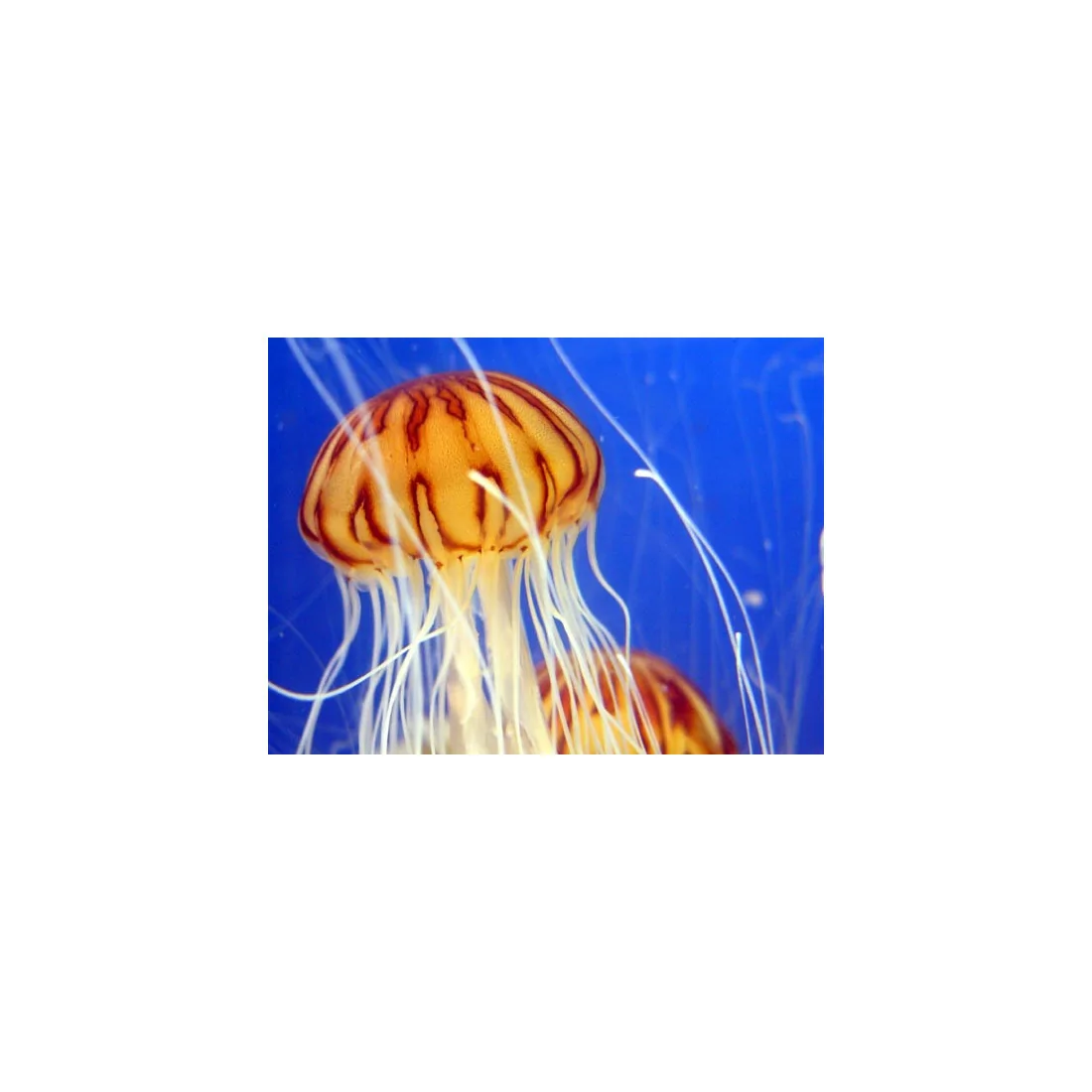
Offer your aquarium a touch of elegance with the Chrysaora hysoscella, a fascinating jellyfish from reproduction. Before welcoming it, make sure your aquarium is ready to maintain its well-being.